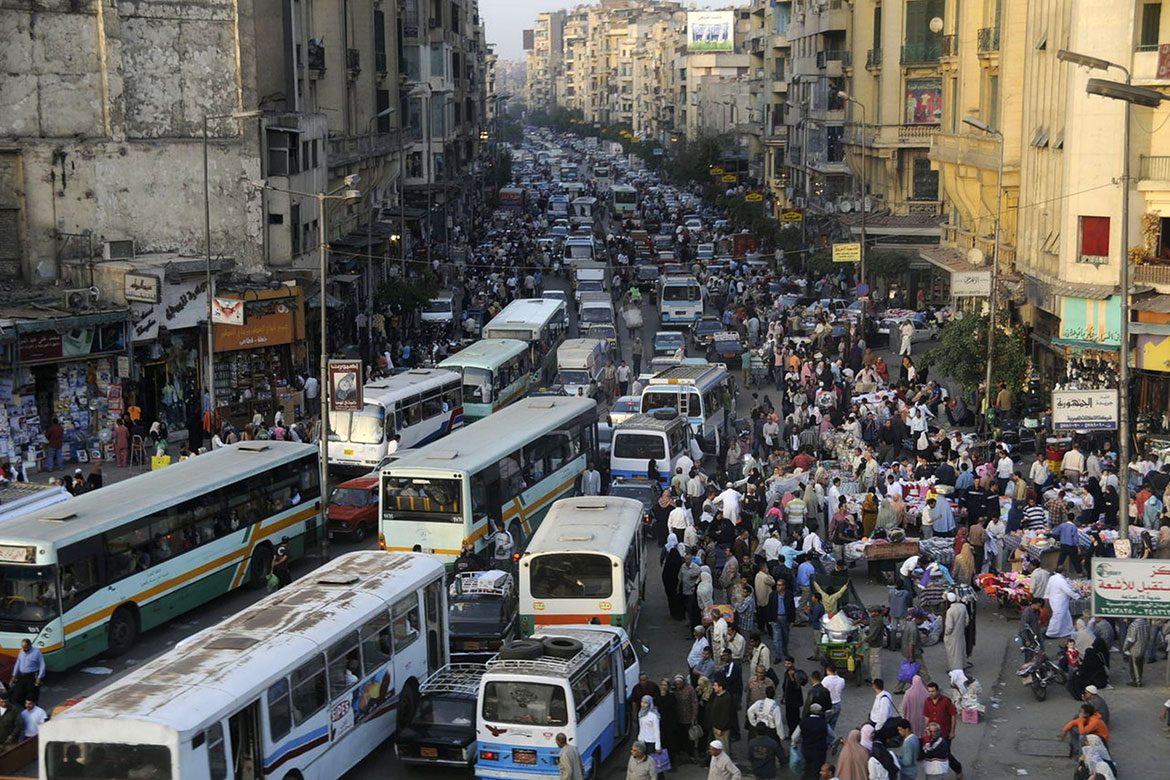
The Egyptian Ministry of Environment confirmed that it is implementing many measures to control air pollution and the surrounding air environment, including activities aimed at improving air quality, and supporting efforts to monitor and improve air quality, noting that for the first time, a specific goal is being set digitally within the framework of the National Strategy for Sustainable Development. Egypt 2030 ″, as the Egyptian government aims to reduce solid particle pollution by 50 percent by the end of 2030.
The Ministry of Environment began procedures to reconcile the conditions of charcoal pipes, as a result of the damage caused by the use of traditional methods in its manufacture, and the associated environmental, health and economic problems. The Ministry of Environment took into account during the plan to develop coal pipes, the use of environmentally sustainable technology in line with the sustainable development strategy for Egypt 2030, which takes into account that the environmental dimension is the basis while encouraging the use of developed models for the production of charcoal and the transfer of traditional cameras to approved industrial areas far from the residential mass in order to preserve On the environment and public health.
The Ministry of Environment completed the development of the environmental conditions and controls necessary to implement the plan, in coordination with all concerned parties, and Prime Minister Decision No. 2914 of 2016 was issued regarding the controls and procedures necessary to reconcile the environmental conditions of the cameras for the production of charcoal in their current locations, as the decision stipulated the formation of committees In different governorates, to reconcile the conditions of the charcoal pipelines with the participation of all concerned parties
During the recent period, the Ministry of Environment approved a number (2) developed models for the production of charcoal, bringing the total number of models that were approved to (10) environmentally compatible models in accordance with the environmental requirements and controls for charcoal production models, indicating that a reconciliation was completed. The status of (38) developed models were installed and the actual production of them, bringing the total number of developed models to (165) developed models, in addition to (7) factories for the production of compressed vegetable charcoal.